

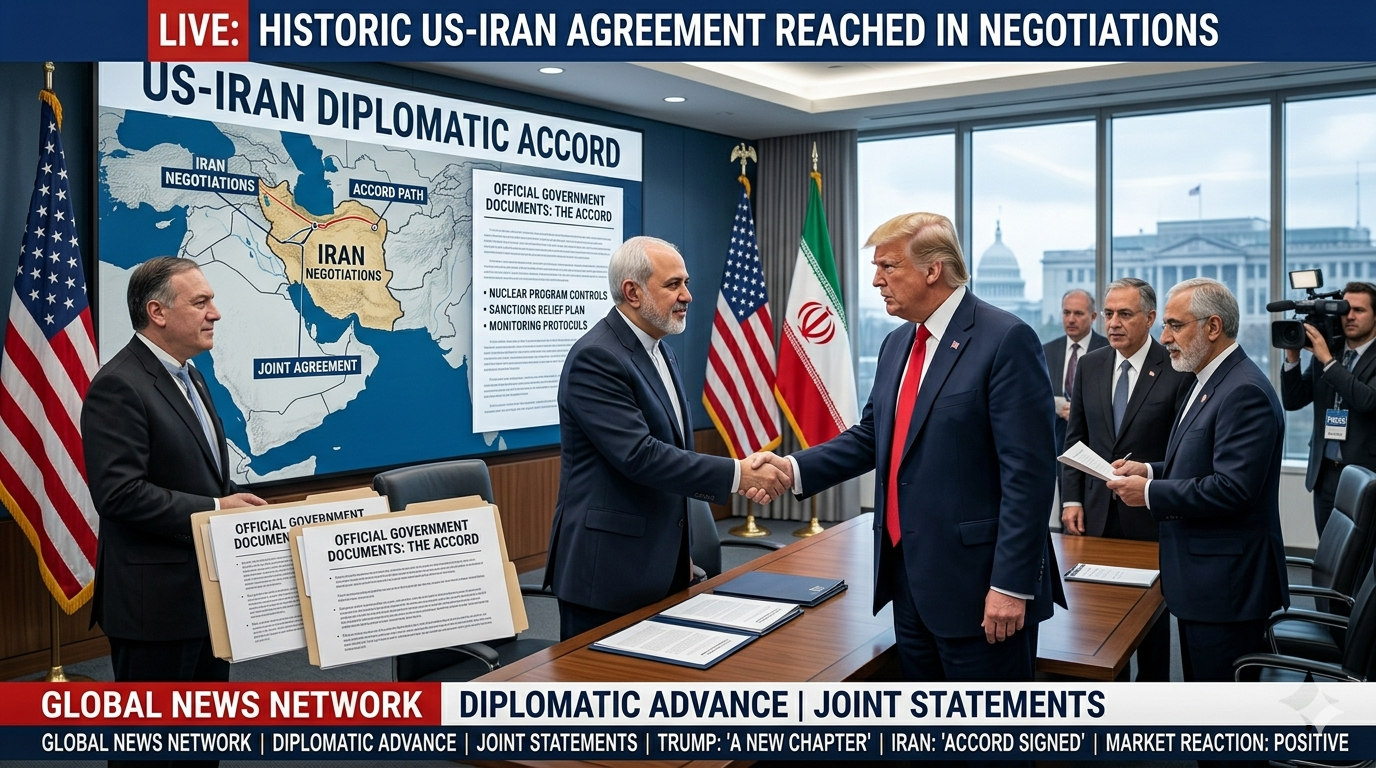
The political landscape surrounding United States-Iran relations has entered a new phase after reports suggested that President Donald Trump has successfully secured an initial agreement with Iran, paving the way for negotiations on what many officials are describing as a “final” deal. The development has become one of the most discussed topics in Donald Trump Politics, drawing attention from policymakers, international observers, and voters across America.
For years, Iran has remained one of the most challenging foreign policy issues facing American leaders. Successive administrations have struggled to balance diplomatic engagement, economic sanctions, and regional security concerns while attempting to prevent further instability in the Middle East. Trump’s latest diplomatic breakthrough has now shifted attention toward the next stage of negotiations, where both sides hope to establish a more comprehensive and lasting agreement.
The preliminary deal represents an important milestone in a long and complicated diplomatic process. While many details remain under discussion, officials familiar with the negotiations believe the agreement creates a framework for future talks. Supporters of the administration argue that securing an initial understanding was necessary before more substantial discussions could take place.
The significance of this development extends beyond diplomatic circles. It has quickly become a major subject in Trump News Today because it reflects one of Donald Trump’s most prominent foreign policy objectives. Throughout his political career, Trump has advocated a strong approach toward Iran while simultaneously expressing willingness to negotiate agreements that he believes better serve American interests.
Many analysts describe the current situation as the beginning of a new chapter rather than the conclusion of a diplomatic effort. While the initial agreement has generated optimism among supporters, experts caution that final negotiations are often more difficult than preliminary discussions. Complex issues involving security guarantees, economic sanctions, verification procedures, and regional stability remain unresolved.
Within Donald Trump Politics, supporters view the agreement as evidence that Trump’s negotiation strategy can produce results. They argue that years of economic pressure and diplomatic engagement created conditions that encouraged Iran to return to the negotiating table. According to this perspective, the administration’s approach has strengthened America’s bargaining position and increased the likelihood of securing favorable terms.
Critics, however, remain cautious. Some foreign policy experts warn that the success of any agreement will ultimately depend on its implementation and enforcement mechanisms. They argue that previous diplomatic arrangements involving Iran encountered challenges because of disagreements over compliance and interpretation. As a result, many observers are waiting to see whether future negotiations produce clear and verifiable commitments from all parties involved.
One of the most important aspects of the upcoming talks will be determining the scope of the final agreement. Negotiators are expected to address several key issues, including sanctions relief, nuclear development restrictions, regional security concerns, and mechanisms for monitoring compliance. Each of these topics presents unique challenges that will require careful diplomacy and compromise.
The economic dimension of the negotiations has also attracted considerable attention. Iran has faced significant economic pressure due to sanctions imposed by the United States and its allies. Any final agreement could potentially influence trade, investment, and financial relations between Iran and the international community. Consequently, business leaders and market analysts are closely monitoring developments for signs of future economic changes.
From a geopolitical perspective, the negotiations carry implications that extend far beyond the United States and Iran. Countries throughout the Middle East are watching closely because the outcome could affect regional security dynamics. Allies of the United States want assurances that any agreement will contribute to stability and address longstanding concerns regarding regional conflicts and security threats.
The current negotiations also highlight Trump’s reputation as a dealmaker, a central theme that has shaped much of his political identity. Supporters frequently point to his business background as evidence of his ability to negotiate complex agreements. The Iran discussions provide another opportunity for the administration to demonstrate how its negotiating style differs from previous approaches taken by American leaders.
In recent US Politics Updates, lawmakers from both parties have expressed interest in reviewing the terms of any future agreement. Congressional oversight is expected to play an important role as negotiations progress. Members of Congress will likely seek detailed information regarding the agreement’s provisions, enforcement mechanisms, and potential impact on national security.
Public opinion may also influence the direction of the talks. Americans have diverse views regarding foreign policy and diplomatic engagement with Iran. Some voters support direct negotiations as a means of reducing tensions and preventing conflict, while others prefer maintaining maximum pressure until more extensive concessions are achieved. These differing perspectives ensure that the negotiations will remain a prominent topic in political discussions.
Another critical factor involves verification and accountability. Experts widely agree that any successful agreement must include reliable mechanisms for monitoring compliance. Verification procedures help build trust between negotiating parties and reduce the risk of misunderstandings or disputes. As talks continue, negotiators will likely devote significant attention to developing effective monitoring systems.
The media has played a significant role in shaping public understanding of the negotiations. Coverage in Trump News Today has focused on both the opportunities and challenges associated with the agreement. While some reports emphasize the potential for diplomatic progress, others highlight unresolved questions that negotiators must address before a final deal can be reached.
International reactions have been mixed. Some governments have welcomed the development as a positive step toward reducing tensions in the region. Others remain cautious, emphasizing the importance of transparency and enforcement. These differing reactions reflect the complexity of the issues involved and the high stakes associated with the negotiations.
The road toward a final agreement is unlikely to be straightforward. Diplomatic negotiations often involve setbacks, disagreements, and unexpected developments. Even after a preliminary understanding has been reached, substantial work remains necessary to transform broad principles into a detailed and enforceable agreement. Negotiators on both sides will need to navigate political pressures, strategic concerns, and competing priorities.
For Trump, the negotiations represent an opportunity to secure a significant foreign policy achievement. Success could strengthen his standing among supporters who view strong international leadership as an important priority. At the same time, failure to reach a comprehensive agreement could provide critics with ammunition to challenge the effectiveness of the administration’s strategy.
The coming months are expected to be crucial. Diplomatic teams will continue refining proposals, addressing areas of disagreement, and exploring potential compromises. Observers anticipate intensive discussions focused on balancing national interests with the broader goal of regional stability.
Many foreign policy specialists believe that the ultimate success of the negotiations will depend on whether both sides can establish mutual confidence. Trust has historically been a major obstacle in US-Iran relations. Building sufficient confidence to support a lasting agreement will require transparency, consistency, and a demonstrated commitment to honoring negotiated obligations.
The significance of these negotiations extends beyond immediate political considerations. A successful agreement could influence international diplomacy, economic relations, and security policies for years to come. Conversely, a breakdown in talks could increase uncertainty and contribute to renewed tensions in an already volatile region.
As developments continue to unfold, the story remains one of the most closely followed subjects in Donald Trump Politics. Political analysts, lawmakers, international leaders, and ordinary citizens are all watching for signs of progress. Every new statement, diplomatic meeting, and policy announcement has the potential to influence public perceptions and shape the future direction of the negotiations.
In conclusion, Trump’s initial Iran agreement has established a foundation for what could become one of the most significant diplomatic efforts of his political career. While important challenges remain, the transition from a preliminary deal to negotiations on a final agreement marks a notable milestone. Whether the talks ultimately result in a lasting and comprehensive settlement remains uncertain, but their outcome will undoubtedly influence future Trump News Today coverage and broader US Politics Updates. The world will continue watching as negotiators attempt to transform an initial breakthrough into a final agreement capable of reshaping US-Iran relations and regional stability for years to come.

