

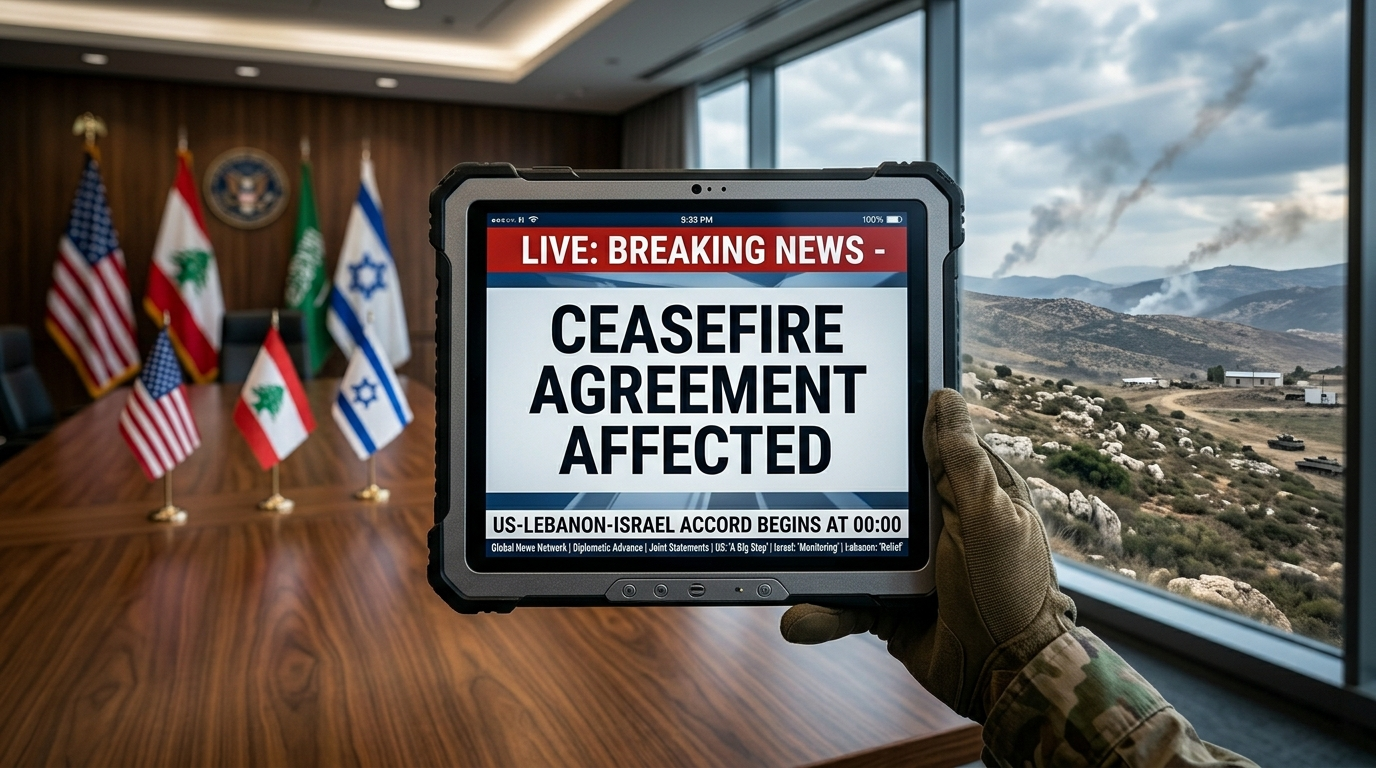
The geopolitical landscape of the Middle East has taken a dramatic turn as Israel and the Lebanon-based militant group Hezbollah have officially agreed to a renewed ceasefire, according to a senior US official. The development comes at a critical juncture for international diplomacy, heavily intersecting with current US Politics Updates and the overarching foreign policy framework of the United States. As the global community watches the fragile truce unfold, the strategic maneuvers behind the scenes highlight the shifting dynamics of global governance, regional stabilization, and the influential role of American leadership under Donald Trump.
- The Breakthrough Agreement: What We Know
- Donald Trump’s Strategic Pressure and Foreign Policy
- Inside the Diplomatic Machinery: US, Qatar, and Iran
- The Domestic Impact: Debates Within US Politics Updates
- Challenges on the Ground: Will the Truce Hold?
- The Broader Geopolitical Implications
- Conclusion: A Cautious Path Forward
The announcement of the ceasefire follows a period of intense, deadly escalations along the Israel-Lebanon border that threatened to completely unravel broader diplomatic achievements in the region. Observers tracking Trump News Today will note that this development is heavily tied to Washington’s broader efforts to de-escalate regional hostilities and secure long-term maritime and territorial stability. With mediators from the United States, Qatar, and Iran working intensely behind closed doors, this ceasefire represents both a fragile sigh of relief for civilian populations and a high-stakes test for modern international relations.
The Breakthrough Agreement: What We Know
According to official briefings, the truce officially took effect at 4:00 PM local time on Friday. The breakthrough was finalized after an intense 24-hour window of heavy military exchanges that brought both sides to the brink of an all-out, unmanageable war. A senior US official, speaking on the condition of anonymity, confirmed that both parties committed to a halt in active offensive operations following high-level diplomatic pressure.
The context of this agreement is deeply rooted in contemporary Politics. For weeks, military friction in southern Lebanon had been intensifying, culminating in a series of severe clashes. A devastating escalation saw dozens of casualties from Israeli airstrikes in Lebanon, while Hezbollah rocket and drone attacks resulted in the deaths of multiple Israeli soldiers. This sharp spike in violence threatened to postpone critical international talks scheduled to take place in Switzerland, prompting immediate and aggressive intervention from Washington.
An Israeli official later confirmed the baseline parameter of the agreement to international press, stating, “If Hezbollah does not attack us, then for us it is not a time of war.“ However, the situation remains highly complex on the ground, as Israel has indicated that its defense forces will maintain their strategic presence in parts of southern Lebanon for the time being to ensure local security. This conditional state of peace keeps the entire agreement on a razor’s edge.
Donald Trump’s Strategic Pressure and Foreign Policy
The timing of the ceasefire cannot be separated from the assertive foreign policy stance taken by Donald Trump. The administration has placed immense focus on resolving long-standing global conflicts through a mix of economic leverage, direct rhetoric, and bilateral negotiations. In the days leading up to the Friday announcement, the White House expressed growing frustration with the continued infrastructural destruction and high civilian casualties in the region.
"When two drones are shot into the desert and drop harmlessly, you don't have to knock
down buildings in Beirut. They could behave better, and frankly they could do a better
job."
— Donald Trump, commenting at international forums
This candid approach underscores a broader shift within US Politics Updates, where traditional diplomatic caution is frequently replaced by direct, bottom-line expectations from the executive branch. The administration’s strategy emphasizes that while the United States remains a staunch ally of its partners in the region, regional stability must take priority to protect global economic interests—particularly the security of international shipping lanes like the Strait of Hormuz.
Furthermore, Vice President J.D. Vance reinforced this hardline stance by publicly urging regional stakeholders to align with the shifting realities of global diplomacy. In a recent White House briefing, Vance stressed the importance of recognizing the administration’s unique position as a mediator capable of commanding regional respect, explicitly noting that ignoring Washington’s diplomatic blueprints would leave regional actors increasingly isolated on the global stage.
Inside the Diplomatic Machinery: US, Qatar, and Iran
While public statements often capture the headlines in Trump News Today, the true engine of this ceasefire was a complex, multi-lateral diplomatic framework involving the US, Qatar, and Iran. The involvement of Iran—Hezbollah’s primary backer and financier—was critical. Senior regional lawmakers revealed that discussions regarding broader international trade and sanctions relief could not realistically progress without an immediate, comprehensive ceasefire on the Lebanese front.
This interdependence highlights the intricate nature of modern geopolitical conflict:
- The US Role: Acting as the primary guarantor and leveraging its massive political weight to keep communication channels open.
- The Qatari Mediation: Providing the neutral diplomatic ground and structural communication lines necessary to bridge ideological gaps.
- The Iranian Variable: Facilitating compliance from non-state actors while managing its own economic and diplomatic objectives with Washington.
The broader objective of these intense discussions is to transform temporary pauses in fighting into a structured, 60-day negotiation window. During this timeframe, diplomats hope to address core underlying issues, including regional security parameters and international monitoring frameworks, to prevent a regression into active warfare.
The Domestic Impact: Debates Within US Politics Updates
Domestically, the administration’s handling of Middle Eastern diplomacy has triggered a wave of intense debate across the American political spectrum. In the realm of Washington Politics, foreign policy achievements are heavily scrutinized, and this ceasefire is no exception.
Republican hawks and progressive Democrats alike have raised vital questions regarding the long-term cost of these diplomatic deals. Critics argue that regional frameworks involving substantial reconstruction funds or sanctions modifications might inadvertently provide resources to adversarial networks. On the other hand, defenders of the current policy argue that preventing a multi-front regional war—and stabilizing global energy markets—far outweighs the political risks of unconventional diplomacy.
Donald Trump quickly dismissed domestic criticisms via social media, strongly maintaining that the United States is operating from a position of undisputed strength. He noted that economic pressures have significantly diminished the leverage of foreign adversaries, forcing them to the negotiating table out of necessity rather than choice. This ongoing domestic debate ensures that the developments in Lebanon will remain a central talking point in upcoming legislative sessions and political commentary.
Challenges on the Ground: Will the Truce Hold?
Despite the optimistic announcements flowing from official channels, the reality on the ground in southern Lebanon and northern Israel tells a far more cautious story. Even within the initial hours of the ceasefire’s implementation, localized smoke plumes and reports of artillery exchanges indicated just how fragile the agreement truly is.
Ceasefire Structural Analysis:
┌───────────────────────────────────────┐
│         Fragile Ceasefire            │
└───────────────────┬───────────────────┘
                    │
         ┌──────────┴──────────┐
         ▼                     ▼
┌─────────────────┐   ┌─────────────────┐
│ Israeli Presence│   │Hezbollah Tunnel │
│ in South Lebanon│   │ Networks Active │
└─────────────────┘   └─────────────────┘
The primary structural obstacle to long-term peace is the unresolved status of military deployments. The Israeli military, through spokespersons like Brigadier General Effie Defrin, has emphasized that its troops retain “full operational freedom” to neutralize perceived threats. Specific focus remains on dismantling extensive underground command infrastructures and tunnel networks along strategic border ridges like Ali al-Taher.
Concurrently, Hezbollah maintains that its military actions are inherently defensive measures against foreign territorial overreach. With both sides operating under vastly different interpretations of what constitutes a “violation,” the potential for an isolated tactical engagement to trigger a wider strategic collapse remains incredibly high.
The Broader Geopolitical Implications
If the ceasefire managed by US and Qatari mediators holds, the global implications will be profound. First and foremost, it prevents a catastrophic disruption to international trade routes. Earlier threats of escalation had already caused severe anxieties within global shipping and insurance sectors, driving up energy costs and threatening consumer supply chains worldwide.
Second, a sustained pause in hostilities allows international humanitarian organizations to access heavily damaged border towns, delivering crucial aid, medical supplies, and reconstruction support to displaced civilian populations who have borne the brunt of the conflict.
Finally, for readers tracking US Politics Updates, the success or failure of this initiative will serve as a definitive case study on the efficacy of modern American deal-making. It tests whether direct, transaction-based executive pressure can effectively substitute for traditional, decade-long institutional diplomacy in the world’s most volatile regions.
Conclusion: A Cautious Path Forward
The announcement that Israel and Hezbollah have agreed to a ceasefire in Lebanon stands as a significant milestone in contemporary global affairs. Driven by intense behind-the-scenes negotiations and shaped by the direct foreign policy mandates of Donald Trump, the agreement represents a vital opportunity to pivot away from catastrophic regional escalation.
However, as history has repeatedly shown in the Middle East, signing an agreement is merely the first step; enforcing it is where the true difficulty lies. With deep-seated mistrust on both sides, unresolved territorial issues, and intense political crosscurrents within American domestic Politics, the coming weeks will prove decisive. Whether this truce evolves into a historic blueprint for regional peace or goes down as a temporary pause in an unending conflict remains to be seen. For now, the world watches with guarded optimism, hoping that diplomacy can finally outpace the drums of war.

