

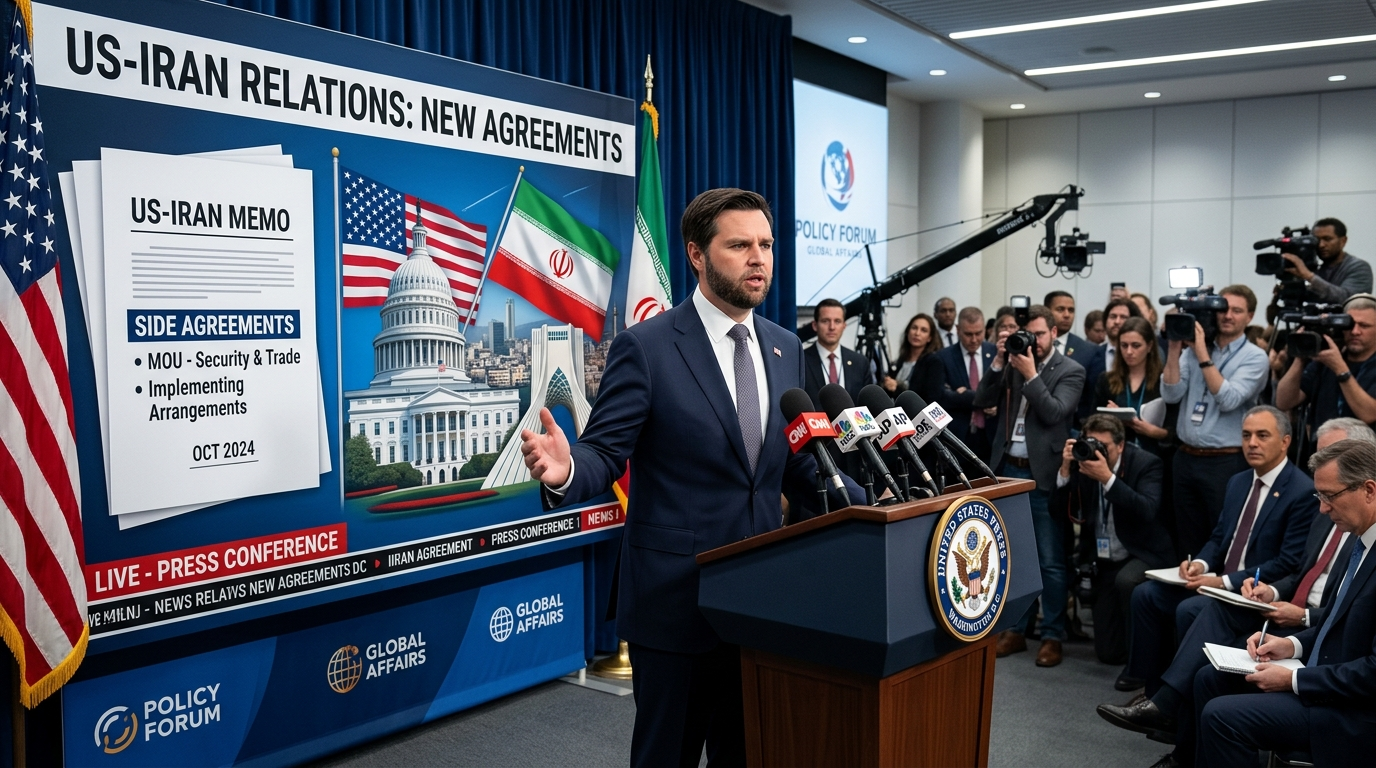
Recent comments from JD Vance have reignited debate over US-Iran relations after he suggested that written side agreements may exist alongside a signed memorandum between the United States and Iran. The statement has generated widespread attention among political observers, foreign policy experts, and supporters of former President Donald Trump. As discussions continue to unfold, questions regarding transparency, diplomatic strategy, and national security have become central topics within Donald Trump Politics and broader US Politics Updates.
The possibility of side deals in international agreements is not a new concept. Governments often negotiate supplementary understandings that clarify obligations, implementation procedures, or future commitments. However, when such arrangements are not publicly disclosed, they frequently become subjects of controversy. JD Vance’s remarks have fueled speculation about whether additional written commitments exist beyond what has been officially presented to lawmakers and the public.
According to political analysts, the concern surrounding alleged side agreements stems from their potential impact on American foreign policy. If written side deals exist, they could influence sanctions policies, diplomatic engagement, security commitments, or future negotiations between Washington and Tehran. Supporters of greater transparency argue that any significant agreement affecting US national interests should be openly discussed and reviewed by elected representatives.
The issue has become a major talking point in Trump News Today because many Republicans continue to scrutinize US-Iran diplomatic efforts. Critics of the current approach argue that previous negotiations with Iran often involved complex arrangements that were difficult for the public to fully understand. They contend that hidden commitments can undermine confidence in government decision-making and create uncertainty about America’s long-term strategic objectives.
JD Vance’s comments reflect a broader concern among conservative policymakers who believe that foreign policy agreements should be subjected to rigorous oversight. They argue that transparency strengthens democratic accountability and ensures that important national security decisions receive appropriate scrutiny. By raising questions about possible written side deals, Vance has positioned himself within a larger debate over how international agreements should be negotiated and disclosed.
Supporters of the administration maintain that diplomatic negotiations frequently involve technical documents, implementation frameworks, and supplementary materials that are common in international relations. They emphasize that not every supporting document represents a secret agreement. Instead, many such documents are designed to facilitate practical cooperation and clarify procedural details. These supporters caution against drawing conclusions without concrete evidence regarding the existence or content of any alleged side arrangements.
The controversy highlights the challenges associated with modern diplomacy. International negotiations often involve multiple stakeholders, complex legal frameworks, and evolving strategic considerations. As a result, agreements may include annexes, memorandums, or supporting documents intended to address specific issues. While these mechanisms can improve the effectiveness of diplomatic arrangements, they may also create confusion if their purpose is not clearly communicated to the public.
Within Donald Trump Politics, the discussion has gained additional significance because of the former president’s longstanding criticism of certain US-Iran agreements. Throughout his political career, Donald Trump consistently argued for a tougher approach toward Iran, emphasizing sanctions, economic pressure, and strict verification measures. Many of his supporters view transparency as a critical component of any future diplomatic engagement with Tehran.
Foreign policy experts note that side agreements can serve legitimate diplomatic purposes under certain circumstances. For example, supplementary documents may address technical implementation procedures, timelines, verification mechanisms, or dispute resolution processes. However, critics argue that if such documents contain substantive policy commitments, they should be disclosed to ensure proper oversight and public understanding.
The debate surrounding Vance’s comments also reflects broader concerns about trust in government institutions. Public confidence can be affected when questions arise regarding the completeness of official disclosures. Political leaders from both parties have often faced pressure to provide greater transparency concerning international negotiations, particularly when national security interests are involved.
Another important aspect of the discussion involves congressional oversight. Members of Congress play a critical role in reviewing foreign policy initiatives and evaluating their potential consequences. If significant side agreements exist, lawmakers may seek additional information to determine how those arrangements align with existing US policies and strategic objectives. This oversight function is essential to maintaining checks and balances within the American political system.
The controversy has also attracted attention from international observers. Allies and adversaries alike closely monitor US-Iran relations because developments in the relationship can influence regional stability, energy markets, and global security dynamics. Any suggestion of undisclosed agreements naturally generates interest among governments seeking to understand the future direction of American foreign policy.
In recent years, discussions about transparency have become increasingly important in US Politics Updates. Citizens expect greater access to information and often demand detailed explanations regarding government actions. Digital media and social platforms have amplified public interest in political developments, making it more difficult for policymakers to avoid scrutiny when questions emerge about significant diplomatic initiatives.
Some analysts believe that the current debate may ultimately encourage greater disclosure and communication from government officials. By addressing concerns directly and providing additional context regarding any supporting documents associated with diplomatic agreements, policymakers could help reduce speculation and improve public understanding. Clear communication remains one of the most effective tools for building trust and maintaining confidence in government decision-making.
From a strategic perspective, US-Iran relations remain one of the most complex issues in international politics. The relationship involves concerns about regional security, nuclear development, economic sanctions, and diplomatic engagement. Any agreement between the two countries is likely to receive intense scrutiny from policymakers, analysts, and the public regardless of political affiliation.
The reaction to Vance’s comments demonstrates how foreign policy issues can quickly become central topics in domestic political debates. Statements from influential political figures often shape public discourse and influence how citizens interpret international developments. As a result, even preliminary suggestions regarding possible side agreements can generate substantial media coverage and political discussion.
Political observers expect that further information may emerge as lawmakers, journalists, and policy experts continue examining the claims. Whether additional documents exist and what role they may play in US-Iran relations remains a subject of ongoing analysis. Until more details become available, the debate is likely to continue attracting attention across both traditional and digital media platforms.
For supporters of transparency, the controversy serves as a reminder of the importance of open government and accountable leadership. For defenders of diplomatic flexibility, it highlights the practical realities of conducting complex international negotiations. Both perspectives underscore the delicate balance policymakers must maintain between effective diplomacy and public accountability.
As developments continue to unfold, the story remains a significant topic within Trump News Today and broader US Politics Updates. The questions raised by JD Vance have intensified scrutiny of US-Iran diplomacy and reinforced ongoing debates about transparency, oversight, and national security. Regardless of the eventual outcome, the discussion illustrates the enduring importance of public trust and informed debate in shaping American foreign policy.
Looking ahead, policymakers, analysts, and citizens will continue monitoring new information related to the alleged side agreements. Future disclosures, congressional inquiries, or official statements could provide greater clarity regarding the nature of the signed memorandum and any accompanying documents. Until then, the issue will likely remain a prominent subject in Donald Trump Politics, reflecting the continued significance of US-Iran relations in both domestic and international affairs.
In conclusion, JD Vance’s suggestion that the United States and Iran may have written side deals associated with a signed memorandum has sparked widespread political discussion. The debate touches on critical issues including transparency, accountability, foreign policy strategy, and national security. As Americans seek greater clarity regarding diplomatic agreements, the controversy serves as an important reminder of the need for open communication and effective oversight in government decision-making. Whether the allegations are ultimately substantiated or not, the discussion has already become a major element of Trump News Today and ongoing US Politics Updates.

