

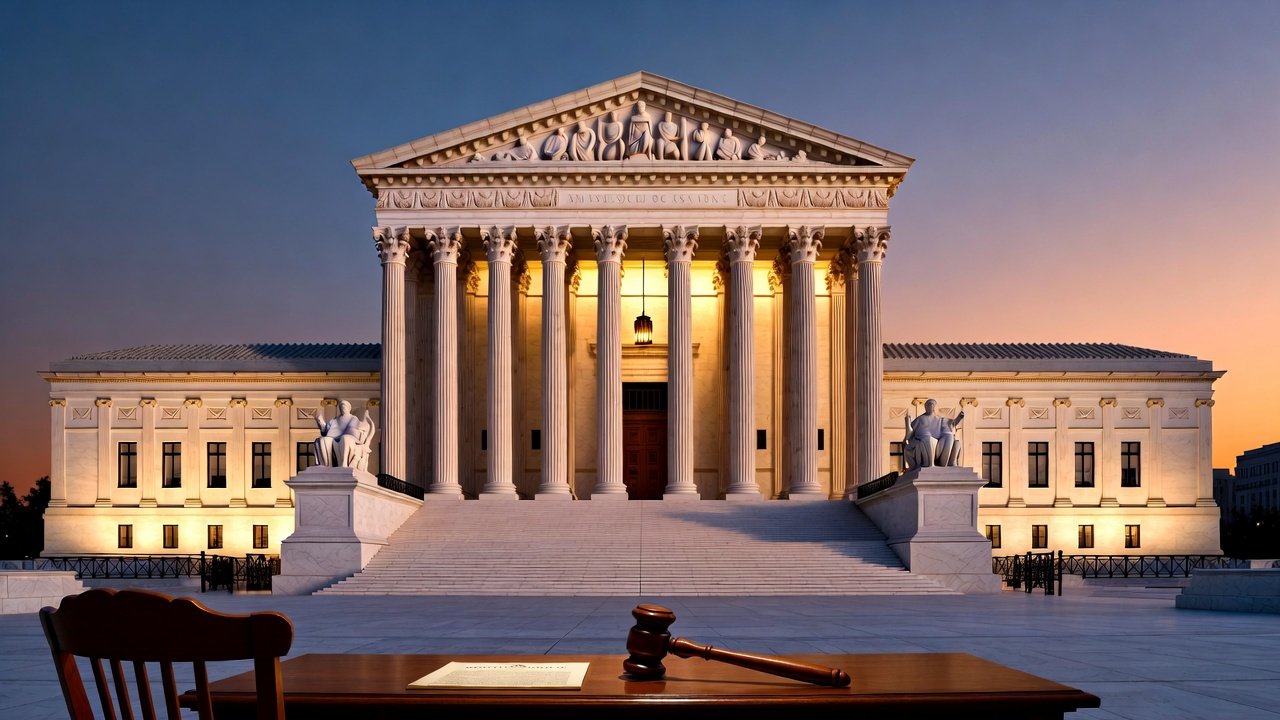
Few Supreme presidential powers carry consequences as enduring as judicial appointments. During his four years in office, Donald Trump reshaped the federal judiciary in ways that will influence American law for decades. Most notably, his three appointments to the nation’s highest court transformed the ideological balance of the Supreme Court of the United States.
- The Constitutional Power of Judicial Appointments
- The Three Supreme Court Appointments
- The Broader Federal Judiciary Impact
- Judicial Philosophy and Conservative Legal Thought
- Major Supreme Court Decisions
- Dobbs v. Jackson Women’s Health Organization (2022)
- Religious Liberty and Free Exercise Cases
- Administrative Authority Cases
- The Political Debate Over Court Expansion
- Electoral Implications
- Long-Term Legal Consequences
- Institutional Balance and Separation of Powers
- Public Trust and Legitimacy
- A Generational Legacy
- Conclusion: The Enduring Impact of Judicial Appointments
Supporters view these appointments as a defining conservative achievement. Critics argue they represent a sharp ideological shift with sweeping social consequences. Regardless of perspective, the impact is undeniable: Trump’s Supreme Court legacy is one of the most significant elements of his presidency.
This article examines how his judicial appointments were made, the constitutional framework behind them, and the long-term implications for American law and governance.
The Constitutional Power of Judicial Appointments
Under Article II of the U.S. Constitution, the president nominates federal judges, including Supreme Court justices, with the advice and consent of the Senate. Once confirmed, justices serve lifetime appointments, insulating them from electoral politics.
Because of lifetime tenure, even a single appointment can shape legal precedent for a generation. Trump appointed three justices — an unusually high number for a single term president — thereby shifting the Court’s ideological composition toward a more conservative majority.
The Three Supreme Court Appointments
Trump nominated:
- Neil Gorsuch (2017)
- Brett Kavanaugh (2018)
- Amy Coney Barrett (2020)
Each confirmation followed intense political debate, reflecting the high stakes associated with Supreme Court vacancies.
Neil Gorsuch
Appointed to replace Justice Antonin Scalia, Gorsuch was widely viewed as a textualist and originalist — judicial philosophies emphasizing constitutional interpretation based on original public meaning.
His confirmation process involved procedural changes in the Senate, including the extension of the “nuclear option,” eliminating the 60-vote threshold for Supreme Court confirmations.
Brett Kavanaugh
Kavanaugh’s confirmation was marked by contentious hearings and national debate. Once confirmed, he joined the Court’s conservative wing, influencing rulings related to executive authority, administrative law, and religious liberty.
Amy Coney Barrett
Nominated shortly before the 2020 election, Barrett’s confirmation solidified a 6–3 conservative majority on the Court. Her judicial philosophy closely aligns with originalism and constitutional textualism.
The Broader Federal Judiciary Impact
Beyond the Supreme Court, Trump appointed more than 200 federal judges to district and appellate courts. These appointments reshaped the lower courts, which handle the majority of federal cases and frequently serve as stepping stones to the Supreme Court.
Key characteristics of these appointments included:
- Younger nominees, increasing potential tenure length
- Strong emphasis on constitutional originalism
- Significant influence from conservative legal networks
These judicial appointments collectively represent one of the most enduring elements of Trump’s administration.
Judicial Philosophy and Conservative Legal Thought
Many of Trump’s nominees shared a commitment to judicial philosophies associated with textualism and originalism. These frameworks prioritize:
- Strict interpretation of statutory text
- Limiting judicial activism
- Emphasizing separation of powers
Supporters argue this approach restores constitutional balance and curbs judicial overreach. Critics contend it may restrict evolving interpretations of civil rights and social policy.
Understanding these philosophies is essential to analyzing how Trump’s appointments affect case outcomes.
Major Supreme Court Decisions
Since the confirmation of Trump’s nominees, the Court has ruled on several high-profile cases.
Dobbs v. Jackson Women’s Health Organization (2022)
In Dobbs, the Court overturned Roe v. Wade, returning abortion regulation authority to individual states. The decision reflected a significant shift in constitutional interpretation and is widely viewed as one of the most consequential rulings in recent decades.
Supporters argue the decision restored constitutional neutrality on abortion. Critics argue it removed a federally recognized right.
Religious Liberty and Free Exercise Cases
The Court has issued several rulings expanding protections for religious institutions and individuals. These decisions align with long-standing conservative legal priorities.
Administrative Authority Cases
Recent rulings have limited the authority of federal agencies, signaling a recalibration of executive branch power. These decisions reflect skepticism toward expansive administrative regulation.
The Political Debate Over Court Expansion
Trump’s appointments intensified national debate about the role of the Supreme Court in American democracy.
Key points of contention include:
- Whether lifetime tenure should be reformed
- Proposals to expand the number of justices
- Concerns over ideological polarization
While structural reforms have been proposed, constitutional changes would require legislative and potentially constitutional amendments.
Electoral Implications
Judicial appointments became a central issue in presidential campaigns. Conservative voters frequently cited Supreme Court nominations as a motivating factor in supporting Trump.
For many voters, the promise of reshaping the Court represented a long-term policy strategy extending beyond short-term legislation.
This emphasis may influence future campaigns, as judicial nominations increasingly become a defining electoral issue.
Long-Term Legal Consequences
The Supreme Court’s conservative majority may influence decisions in areas such as:
- Second Amendment rights
- Administrative state regulation
- Voting laws
- Religious freedom
- Executive authority
Because justices serve for life, the ideological shift could extend for decades.
However, Supreme Court jurisprudence evolves over time. Future appointments and societal developments may alter current trajectories.
Institutional Balance and Separation of Powers
Trump’s Supreme Court legacy highlights broader questions about constitutional structure. The Court plays a critical role in interpreting laws passed by Congress and actions taken by the executive branch.
A more conservative Court may:
- Narrow interpretations of federal power
- Reinforce states’ rights
- Increase scrutiny of regulatory agencies
These shifts reshape the balance among federal institutions.
Public Trust and Legitimacy
Public confidence in the Supreme Court has fluctuated in recent years. Surveys show differing levels of trust depending on political affiliation.
Some observers argue that heightened politicization of confirmations has affected institutional legitimacy. Others contend that ideological differences have always influenced appointments.
Maintaining judicial independence while navigating partisan divisions remains an ongoing challenge.
A Generational Legacy
Presidents are often remembered for landmark legislation or foreign policy achievements. For Trump, judicial appointments stand among his most lasting impacts.
The combination of three Supreme Court justices and hundreds of lower court judges ensures that his influence on American law will persist long after his presidency.
Supporters describe this as restoring constitutional originalism. Critics view it as entrenching conservative ideology in the judiciary.
Both perspectives acknowledge the scale of transformation.
Conclusion: The Enduring Impact of Judicial Appointments
Trump’s influence on the Supreme Court represents one of the most consequential judicial shifts in modern American history. By appointing three justices — Gorsuch, Kavanaugh, and Barrett — he reshaped the ideological composition of the Court.
Through decisions affecting abortion, administrative power, and religious liberty, the Court’s direction has evolved significantly.
Judicial appointments often define a presidency’s legacy. In this respect, Trump’s impact on the Supreme Court may prove to be one of the most enduring aspects of his time in office.

