

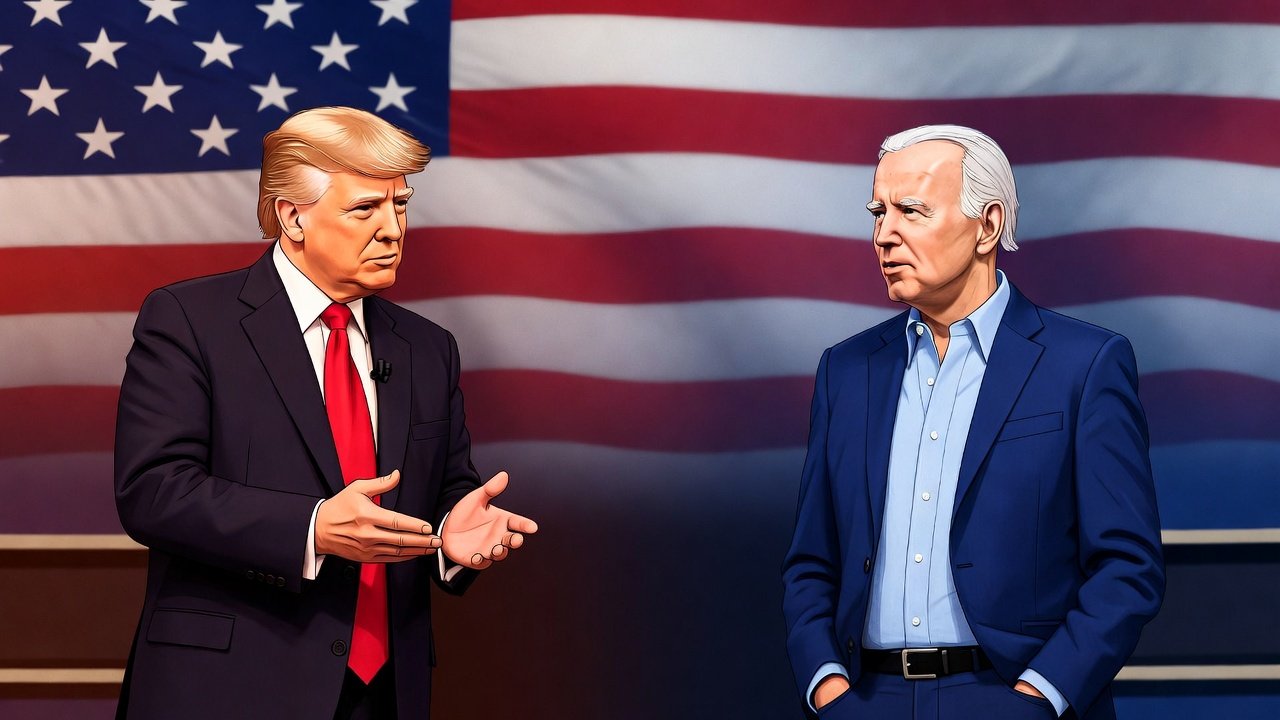
As the United States approaches the 2026 political landscape, comparisons between Donald Trump and Joe Biden remain central to national debate. Both leaders have shaped modern American policy in distinct ways, offering contrasting visions on the economy, immigration, energy, foreign affairs, and social policy.
This article provides a balanced, issue-based comparison of their governing approaches and policy priorities, helping readers understand the differences that may influence future elections.
Economic Policy and Taxation
Donald Trump’s Approach
During his presidency (2017–2021), Trump prioritized tax reduction and deregulation. The Tax Cuts and Jobs Act of 2017 reduced corporate tax rates from 35% to 21% and lowered individual tax rates across several brackets. His administration argued that lowering taxes would stimulate investment, increase wages, and boost economic growth.
Trump also focused on reducing federal regulations, particularly in business and energy sectors, emphasizing private-sector expansion and market-driven growth.
Joe Biden’s Approach
President Biden’s administration has emphasized public investment and middle-class tax relief. Key initiatives include:
- The American Rescue Plan
- The Infrastructure Investment and Jobs Act
- The Inflation Reduction Act
Biden has proposed increasing corporate tax rates and raising taxes on higher-income earners while expanding credits for families and small businesses.
Key Difference
Trump favors lower taxes and deregulation to drive growth, while Biden emphasizes government investment and targeted tax increases to fund social and infrastructure programs.
Immigration Policy
Donald Trump policy
Immigration was a central issue of Trump’s presidency. His administration:
- Strengthened border enforcement.
- Sought funding for a border wall.
- Implemented travel restrictions affecting certain countries.
- Reduced refugee admissions.
- Expanded immigration enforcement priorities.
Trump framed immigration control as essential to national security and economic stability.
Joe Biden
Biden reversed several Trump-era immigration policies. His administration:
- Halted construction of the border wall.
- Increased refugee admission caps.
- Ended certain travel restrictions.
- Adjusted enforcement priorities to focus on serious criminal offenses.
However, Biden has also faced criticism over rising border encounters and has implemented measures aimed at managing migration flows.
Key Difference
Trump emphasizes strict enforcement and deterrence, while Biden focuses on humanitarian reforms combined with enforcement adjustments.
Energy and Climate Policy
Donald Trump
Trump promoted domestic fossil fuel production and deregulation of environmental rules. His administration:
- Withdrew from the Paris Climate Agreement.
- Expanded oil and gas leasing.
- Approved pipeline projects.
- Rolled back environmental regulations.
Trump argued these policies supported energy independence and job growth.
Joe Biden
Biden rejoined the Paris Climate Agreement and has prioritized clean energy investment. The Inflation Reduction Act includes major funding for renewable energy and climate initiatives.
His administration has:
- Set emissions reduction targets.
- Encouraged electric vehicle adoption.
- Invested in renewable infrastructure.
Key Difference
Trump prioritizes fossil fuel expansion and regulatory rollback, while Biden emphasizes climate action and renewable energy transition.
Trade and Manufacturing
Donald Trump
Trump adopted a protectionist trade stance. His administration:
- Renegotiated NAFTA into the United States-Mexico-Canada Agreement (USMCA).
- Imposed tariffs on China.
- Withdrew from the Trans-Pacific Partnership (TPP).
He argued that tariffs and renegotiated agreements would protect American manufacturing.
Joe Biden
Biden has largely maintained certain tariffs on China but has shifted toward multilateral cooperation with allies. His administration has also invested heavily in domestic semiconductor production and manufacturing through legislation such as the CHIPS and Science Act.
Key Difference
Trump favored unilateral tariff-based pressure, while Biden combines domestic investment with alliance-based trade strategy.
Healthcare Policy
Donald Trump
Trump sought to repeal and replace the Affordable Care Act (ACA). While full repeal did not occur, his administration eliminated the individual mandate penalty and expanded short-term health insurance options.
Joe Biden
Biden has worked to strengthen and expand the Affordable Care Act. His administration:
- Increased premium subsidies.
- Expanded Medicaid access in participating states.
- Supported measures to reduce prescription drug costs.
Key Difference
Trump aimed to reduce the federal role in healthcare markets, while Biden has expanded federal support and regulation.
Foreign Policy and National Security
Donald Trump
Trump emphasized an “America First” doctrine. His administration:
- Pressured NATO allies to increase defense spending.
- Withdrew from certain international agreements.
- Negotiated the Abraham Accords between Israel and several Arab nations.
- Engaged in direct diplomacy with North Korea.
Trump favored transactional diplomacy and reduced long-term military commitments abroad.
Joe Biden
Biden has emphasized rebuilding alliances and multilateral engagement. His administration:
- Strengthened NATO coordination.
- Led international responses to Russia’s invasion of Ukraine.
- Re-engaged with global climate diplomacy.
Key Difference
Trump emphasized bilateral negotiations and reduced global commitments, while Biden prioritizes alliance coordination and collective action.
Judicial Appointments
Donald Trump
Trump appointed three Supreme Court justices:
- Neil Gorsuch
- Brett Kavanaugh
- Amy Coney Barrett
He also appointed over 200 federal judges, shifting the judiciary’s ideological balance.
Joe Biden
Biden has appointed federal judges with an emphasis on demographic diversity and professional background diversity, including the historic appointment of the first Black woman to the Supreme Court.
Key Difference
Trump prioritized conservative judicial philosophy; Biden has emphasized diversity and different interpretive approaches.
Fiscal Policy and Deficit
Both administrations oversaw significant federal spending increases, particularly in response to COVID-19.
- Trump signed large stimulus packages in 2020.
- Biden continued economic stimulus efforts and introduced new spending initiatives.
Fiscal debates continue over long-term deficit and debt implications.
2026 Outlook: What Voters May Consider
As voters evaluate leadership heading into 2026 discussions, key issues likely include:
- Inflation and economic stability
- Immigration control
- Energy costs
- National security challenges
- Healthcare affordability
The policy contrast between Trump and Biden represents broader ideological divisions between market-oriented conservatism and government-driven investment strategies.
Conclusion
The policy comparison between Donald Trump and Joe Biden highlights two distinct governing philosophies.
Trump’s approach centers on deregulation, tax reduction, trade protectionism, and stricter immigration enforcement.
Biden’s approach emphasizes public investment, alliance-based diplomacy, expanded healthcare access, and climate action.
As political debates continue, understanding these policy differences allows voters to make informed decisions based on priorities and long-term national goals.
Regardless of political affiliation, the contrast between these two leaders defines the current era of American politics and will likely shape policy direction well beyond 2026.

