

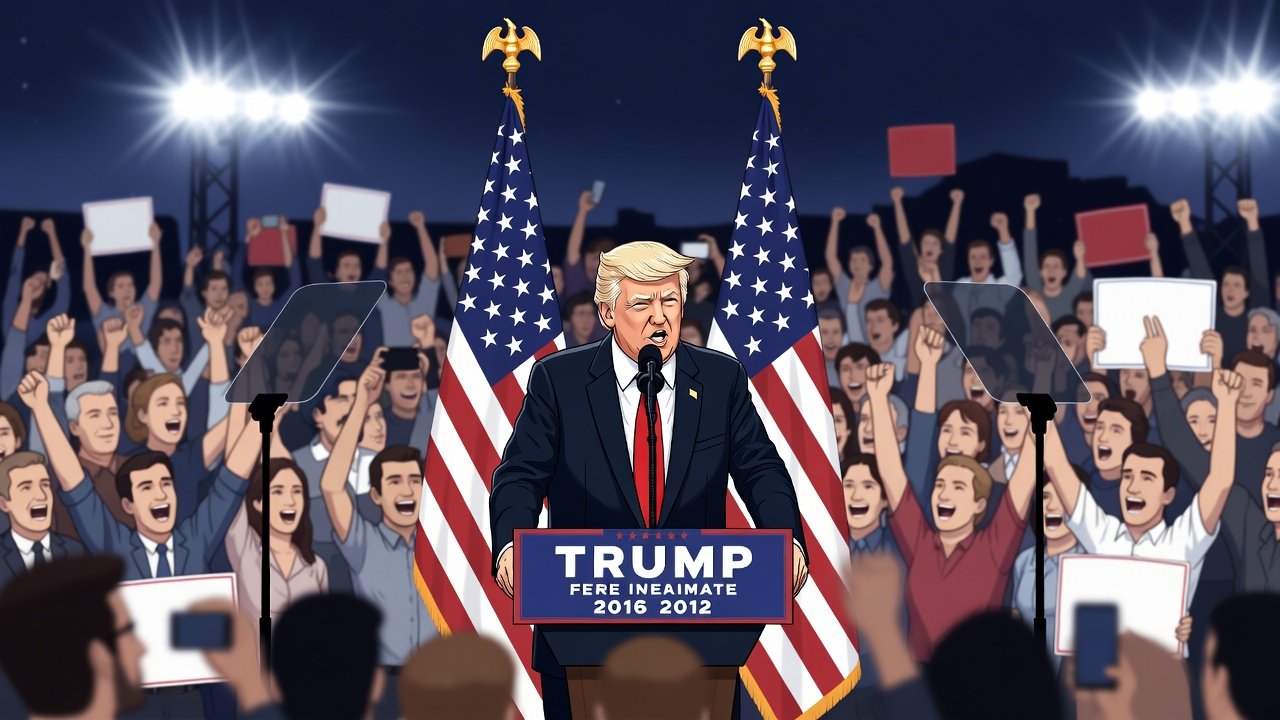
When Donald Trump won the 2016 U.S. presidential election, many political analysts were forced to reconsider long-held assumptions about what it takes to win national office. For decades, presidential campaigns had become increasingly professionalized—carefully structured, data-driven, message-controlled operations guided by seasoned strategists and consultants.
- The Rise of Professional Political Campaigning
- Trump’s Early Campaign: “Let Trump Be Trump”
- Campaign Restructuring: A Shift Toward Professionalism
- Clinton’s Professional Model
- Message Discipline vs. Emotional Connection
- Media Strategy: Domination Through Disruption
- Voter Skepticism Toward “Polished” Politics
- A Divided Republican Party
- Electoral Strategy and Battleground States
- Was It Truly “Unprofessional”?
- A Shift in Political Communication
- Legacy of the 2016 Campaign
- Conclusion
Trump’s campaign, by contrast, often appeared chaotic, improvised, and unconventional. He stumbled through controversies, faced criticism from within his own party, and was frequently described as lacking discipline. Yet he defeated Hillary Clinton, whose campaign was widely regarded as organized, experienced, and methodically planned.
So how did this happen? Was Trump’s apparent lack of professionalism a weakness—or was it part of a new political strategy?
This article examines how Trump’s campaign challenged traditional campaign models and reshaped modern political communication.
The Rise of Professional Political Campaigning
Before analyzing Trump’s approach, it’s important to understand how presidential campaigns evolved.
Over the last few decades, political campaigning has become highly professionalized due to two major developments:
1. Changing Voter Behavior
- Voters have become less loyal to political parties.
- Many citizens express skepticism toward political promises.
- Audiences are fragmented across countless media platforms.
Campaigns now require targeted messaging, strategic branding, and detailed voter data analysis to reach different demographic groups effectively.
2. Media Commercialization
Modern media environments prioritize speed, engagement, and ratings. Campaigns must adapt to:
- 24/7 news cycles
- Social media platforms
- Direct-to-voter digital communication
As a result, campaigns increasingly resemble corporate marketing efforts. Core strategy teams manage slogans, messaging, advertising, demographic targeting, and media relations with precision.
Trump’s Early Campaign: “Let Trump Be Trump”
When Donald Trump launched his presidential campaign on June 16, 2015, his operation was relatively small and unconventional.
His campaign philosophy was simple: “Let Trump be Trump.”
Rather than relying heavily on consultants, Trump:
- Spoke directly to voters at rallies
- Used unscripted language
- Made bold and controversial statements
- Dominated media coverage through personality and spontaneity
This strategy focused on exposure rather than precision targeting during the Republican primaries. Media attention—positive or negative—kept Trump constantly in headlines.
While critics viewed his statements as gaffes, they also ensured continuous visibility.
Campaign Restructuring: A Shift Toward Professionalism
As the primary battle intensified, Trump began incorporating more experienced political figures.
In March 2016:
- Paul Manafort, a veteran of Republican campaigns, joined the team.
- Additional staffers such as Michael Glassner, Rick Wiley, and Ken McKay followed.
This phase signaled an attempt to introduce greater strategic discipline and traditional campaign structure.
However, by August 2016, significant changes occurred again.
Manafort was replaced by:
- Steve Bannon, former executive chairman of Breitbart News
- Kellyanne Conway, a Republican pollster with experience targeting female and youth demographics
This leadership shift suggested a recalibration. The campaign appeared to integrate more targeted messaging strategies and demographic analytics, particularly in key battleground states.
Clinton’s Professional Model
In contrast, Hillary Clinton’s campaign was widely regarded as disciplined and methodical.
Her team:
- Maintained consistent leadership
- Emphasized data-driven voter targeting
- Relied on structured messaging
- Invested heavily in analytics and digital operations
Robby Mook, appointed campaign manager in 2016, focused on predictive data models and turnout strategies.
By traditional standards, Clinton’s campaign embodied modern political professionalism.
Yet despite this structure, the outcome defied expectations.
Message Discipline vs. Emotional Connection
One of the central contrasts between the two campaigns was tone.
Trump frequently:
- Spoke extemporaneously
- Used emotionally charged language
- Framed issues in simple, direct terms
- Repeated the slogan “Make America Great Again”
Critics argued that some policy proposals lacked realism or detail. Supporters, however, interpreted his communication style as authentic and relatable.
His messaging often resonated with voters who felt:
- Economically displaced
- Politically unheard
- Disconnected from Washington institutions
While Clinton’s campaign emphasized experience and policy expertise, Trump’s campaign emphasized emotion and identity.
Media Strategy: Domination Through Disruption
Trump’s campaign leveraged media in unconventional ways.
Rather than carefully managing every appearance, he:
- Generated constant coverage through provocative statements
- Used social media platforms, especially Twitter, to bypass traditional gatekeepers
- Created rally events that functioned as media spectacles
This strategy blurred the line between political campaigning and entertainment. Critics labeled it chaotic; supporters viewed it as transparent and energetic.
Importantly, Trump benefited from unprecedented levels of earned media coverage—media exposure that did not require traditional advertising spending.
Voter Skepticism Toward “Polished” Politics
A significant factor in the election was growing skepticism toward professional political communication.
Many voters expressed distrust toward:
- Carefully scripted messaging
- Consultant-driven campaigns
- Establishment political figures
In this context, Trump’s lack of polish may have functioned as a political asset rather than a liability.
His communication style suggested spontaneity and independence from party elites. For some voters, this reinforced the perception that he was not part of the traditional political system.
A Divided Republican Party
Throughout the campaign, Trump faced resistance within his own party.
Several prominent Republicans criticized or distanced themselves from him. Yet his base remained largely loyal.
This loyalty highlighted another shift in modern politics: the power of personal political branding over party alignment.
Trump’s brand became central to his movement, sometimes overshadowing the Republican Party itself.
Electoral Strategy and Battleground States
Despite the appearance of disorder, Trump’s campaign made strategic decisions in key swing states.
By focusing heavily on states such as:
- Pennsylvania
- Michigan
- Wisconsin
His team identified areas where economic frustration and cultural concerns could shift voting patterns.
While Clinton won the popular vote, Trump secured the necessary Electoral College majority to win the presidency.
This outcome underscored the importance of targeted state-level strategies over national vote totals.
Was It Truly “Unprofessional”?
Labeling the Trump campaign as simply unprofessional may oversimplify the situation.
While it broke conventional norms, it also:
- Adapted rapidly to media cycles
- Maintained consistent slogan branding
- Energized large in-person audiences
- Leveraged digital platforms effectively
The campaign’s structure evolved throughout the race, blending improvisation with strategic recalibration.
It may be more accurate to describe it as a different form of professionalism—one centered on brand authenticity and emotional mobilization rather than polished precision.
A Shift in Political Communication
Trump’s 2016 victory marked a turning point in campaign strategy.
Key lessons observed by analysts include:
- Emotional resonance can outweigh policy detail.
- Media disruption can generate free exposure.
- Anti-establishment positioning can mobilize disengaged voters.
- Authenticity—real or perceived—can be a powerful political tool.
Future campaigns, both Republican and Democratic, have studied these dynamics closely.
Legacy of the 2016 Campaign
The 2016 election reshaped expectations about presidential campaigning.
It challenged the assumption that:
- Tight message control is always superior.
- Professional consultants guarantee victory.
- Data analytics alone determine outcomes.
Instead, it demonstrated that voter sentiment, cultural identity, and media narratives can significantly influence electoral results.
Whether viewed as a rejection of establishment politics or a unique moment in political history, Trump’s victory forced strategists to rethink modern campaigning.
Conclusion
Donald Trump’s 2016 presidential victory disrupted conventional wisdom about campaign professionalism.
While his approach appeared unscripted and controversial, it connected with voters who felt overlooked by traditional political messaging.
In contrast to Hillary Clinton’s structured and data-driven operation, Trump’s campaign emphasized emotional communication, media dominance, and brand authenticity.
Rather than dismissing the campaign as unprofessional, analysts now view it as a case study in evolving political strategy—one that reshaped how candidates engage with modern electorates.
The 2016 election remains a defining moment in American political history, demonstrating that in politics, effectiveness sometimes defies expectation.

