

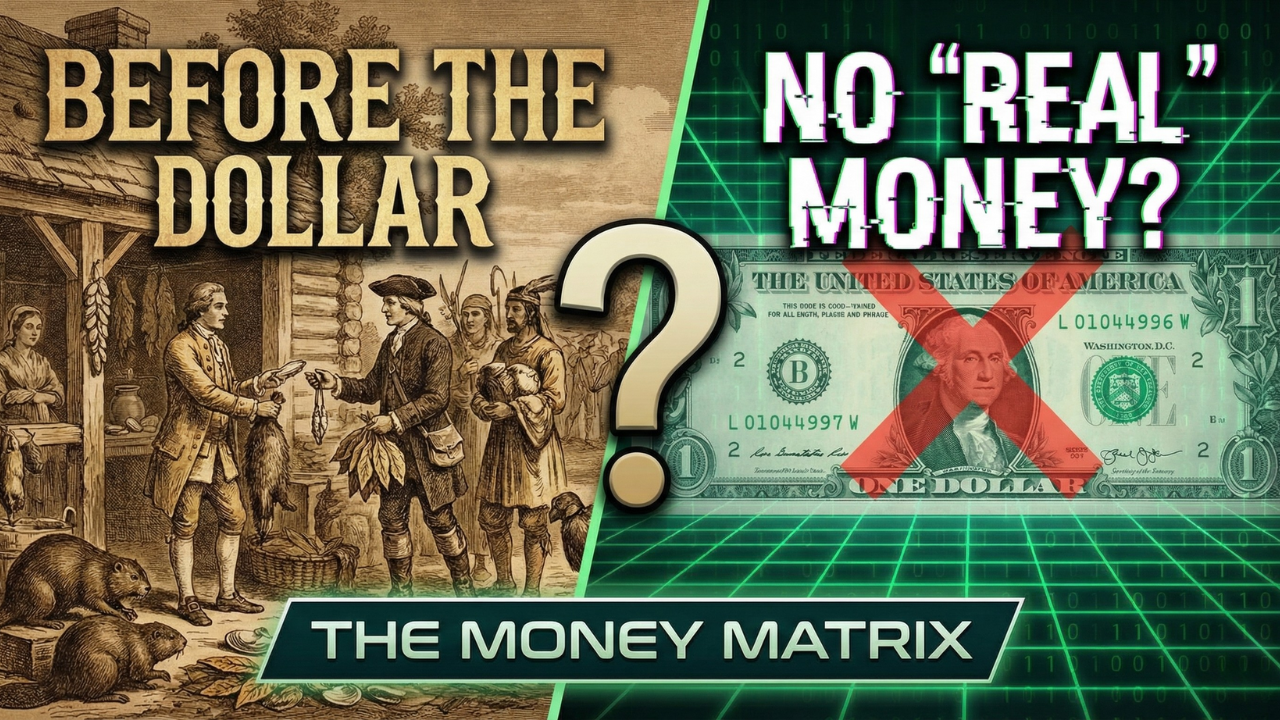
Money feels permanent today.
- When Money Wasn’t Money
- Money as a Social Agreement
- Tobacco Money and the Birth of Inflation
- Shells, Beads, and Collapsing Value
- America’s First Paper Money Experiment
- Collapse Before Independence
- The Currency Acts: Britain Tightens Control
- The American Revolution Was Also a Money War
- A Nation Afraid of Its Own Currency
- The Secret Feud That Still Controls Money
- Why This Story Matters Today
We carry it in our wallets, see it in our bank apps, and trust that it will work tomorrow just like it did yesterday. The US dollar feels stable, reliable, and unquestionable.
But that belief is dangerously modern.
Before the US dollar existed—before Wall Street, before the Federal Reserve—America lived through something very different. There were no dollars, no banks, and no central authority guaranteeing value.
Yet somehow, people survived.
This is the hidden history of money in the USA, a story rarely told in textbooks but essential to understanding inflation, banking power, and financial control today.
👉 You can also watch the full video breakdown here:
When Money Wasn’t Money
In the early 1600s, the American colonies were growing fast. Trade expanded, towns formed, and daily life demanded a functioning economy.
But there was one massive problem.
There was no money.
Britain controlled most of the gold. Silver coins were rare. Whatever coins did exist were hoarded instead of circulated. As a result, everyday life turned into constant negotiation.
How do you pay rent?
How do you buy food?
How do you pay taxes?
The answer wasn’t found in coins.
It was found in trust.
Money as a Social Agreement
Here’s a truth history books often skip:
Money is not value. Money is trust.
Money only works when people agree it works. When that agreement breaks, money collapses.
Early America learned this lesson the hard way.
With no official currency, colonists used whatever others were willing to accept. This system is known as commodity money, and it defined early American life.
Tobacco Money and the Birth of Inflation
In Virginia, tobacco became money.
Not symbolically.
Literally.
Debts were paid in tobacco leaves. Wages were paid in tobacco. Taxes were paid in tobacco. For a short time, it worked.
But tobacco had flaws.
It rotted.
Quality varied.
People cheated.
Low-quality tobacco flooded the system, and trust eroded. Prices rose. Value fell.
This was one of the earliest examples of inflation in colonial America—long before economists had a word for it.
Shells, Beads, and Collapsing Value
In New England, money took another unusual form.
Colonists used wampum, beads made from shells, as currency. At first, everyone agreed they had value.
But when supply increased, trust disappeared.
More beads meant less value.
The system collapsed.
History was already showing a dangerous pattern: when money can be created endlessly, it eventually fails.
America’s First Paper Money Experiment
In 1690, Massachusetts tried something radical.
They printed paper money.
It wasn’t backed by gold or silver. It was backed only by promises. At first, the results looked miraculous.
Trade increased.
Debts were paid.
The economy breathed again.
Other colonies copied the idea, and paper money spread across America.
But one question changed everything:
If money is just paper, what stops governments from printing more?
The answer was simple.
Nothing.
Collapse Before Independence
Colonial governments printed money to fund wars, pay debts, and survive.
The consequences were devastating.
Prices exploded.
Savings vanished.
Confidence died.
By the mid-1700s, colonial paper money was so unstable that people stopped trusting it entirely. The economy slipped toward chaos.
That’s when Britain intervened.
The Currency Acts: Britain Tightens Control
The British government watched the disorder and decided it had gone far enough.
They passed the Currency Acts, banning the colonies from printing their own paper money. Only British-backed currency was allowed.
From London’s perspective, this restored order.
From the colonies’ perspective, it was economic suffocation.
Merchants couldn’t trade.
Farmers couldn’t sell.
Debts piled up.
This wasn’t just political tension.
It was financial warfare.
And it fueled resentment far deeper than tea taxes ever could.
The American Revolution Was Also a Money War
We’re taught the American Revolution was about freedom.
But history reveals something more specific.
It was about who controls money.
When the Revolution began, the colonies returned to what they knew best.
They printed money.
The Continental Dollar was born—and it failed spectacularly. Inflation destroyed its value so completely that “not worth a Continental” became an insult.
America won independence.
But it lost faith in money itself.
👉 This critical moment is explained visually in the video here:
https://www.youtube.com/watch?v=lthrHAcD6pY&pp=0gcJCU0KAYcqIYzv
A Nation Afraid of Its Own Currency
When the United States was formed, the founders were not afraid of armies or kings.
They were afraid of money.
They had lived through:
- Commodity money collapse
- Paper money inflation
- British financial control
They reached one terrifying conclusion:
Money can destroy a nation from the inside.
This fear shaped every financial decision that followed.
And it set the stage for a conflict so personal and so bitter that it would divide two founding fathers and define America’s future.
The Secret Feud That Still Controls Money
The greatest threat to America’s money system wasn’t Britain.
It wasn’t inflation.
It wasn’t chaos.
It was a feud.
A battle between centralized power and individual freedom. Between one man who believed banks create stability and another who believed banks create tyranny.
Their names were Alexander Hamilton and Thomas Jefferson.
The war they started is still controlling your money today.
And that story continues in the next chapter of The Money Matrix.
Why This Story Matters Today
The history of money in the USA explains modern fears about inflation, central banks, and digital currencies.
History doesn’t repeat.
But money always does.
📺 Watch the full video here:
https://www.youtube.com/watch?v=lthrHAcD6pY&pp=0gcJCU0KAYcqIYzv

